
- WORKS
- PROJECTS 案例作品
- ARTS 藝術裝置
- PROFILE
- ABOUT US 關於我們
- AWARDS 獲獎列表
- PROCESS
- PRESS 媒體報導
- ARTICLES 設計文刊
- INFORMATION
- SERVICE 服務項目
- CONTACT 聯絡我們


Conduit Poetics 機能詩學
A Blue, White, and Red Tribute to High-Tech Architecture
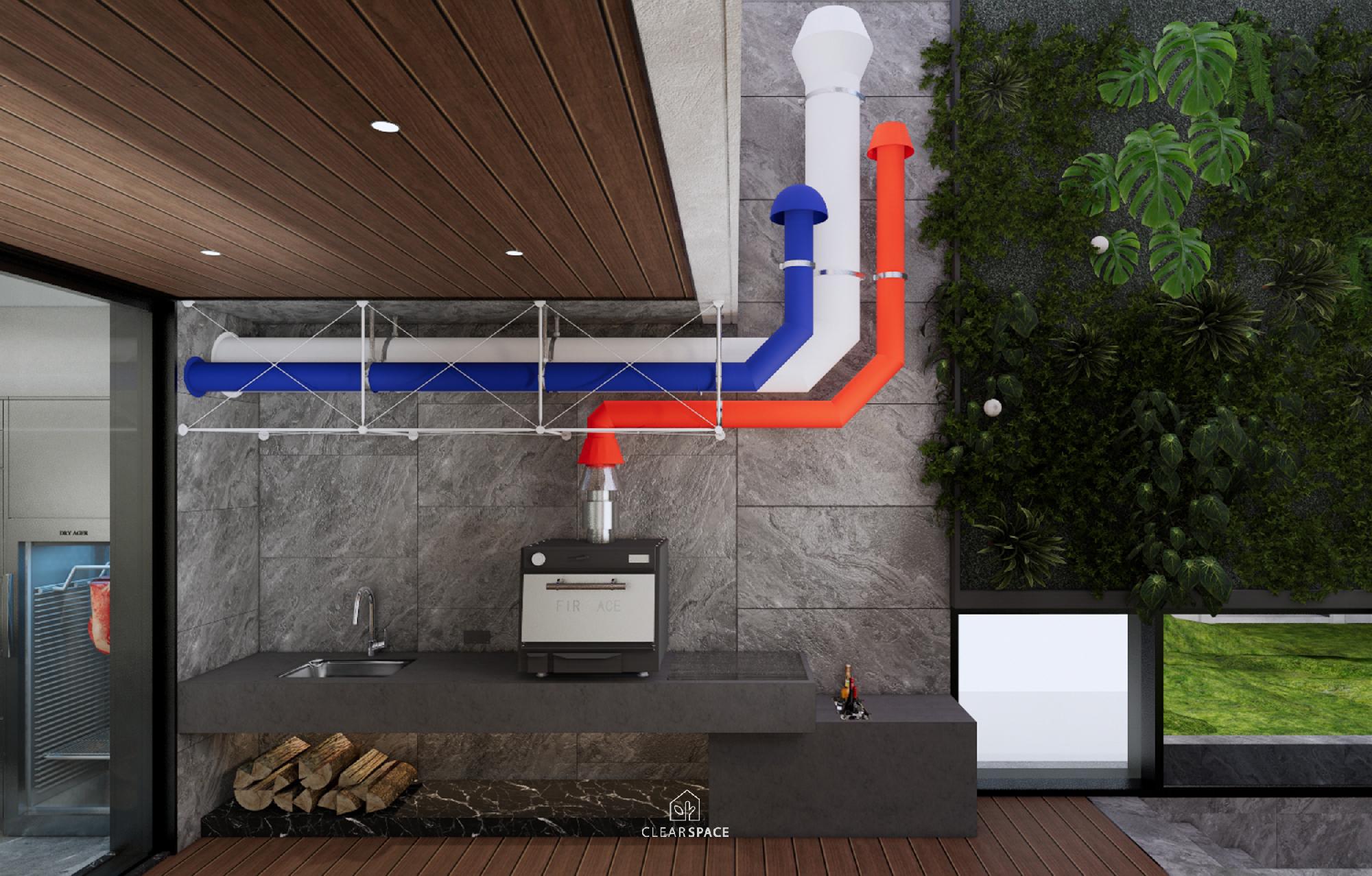
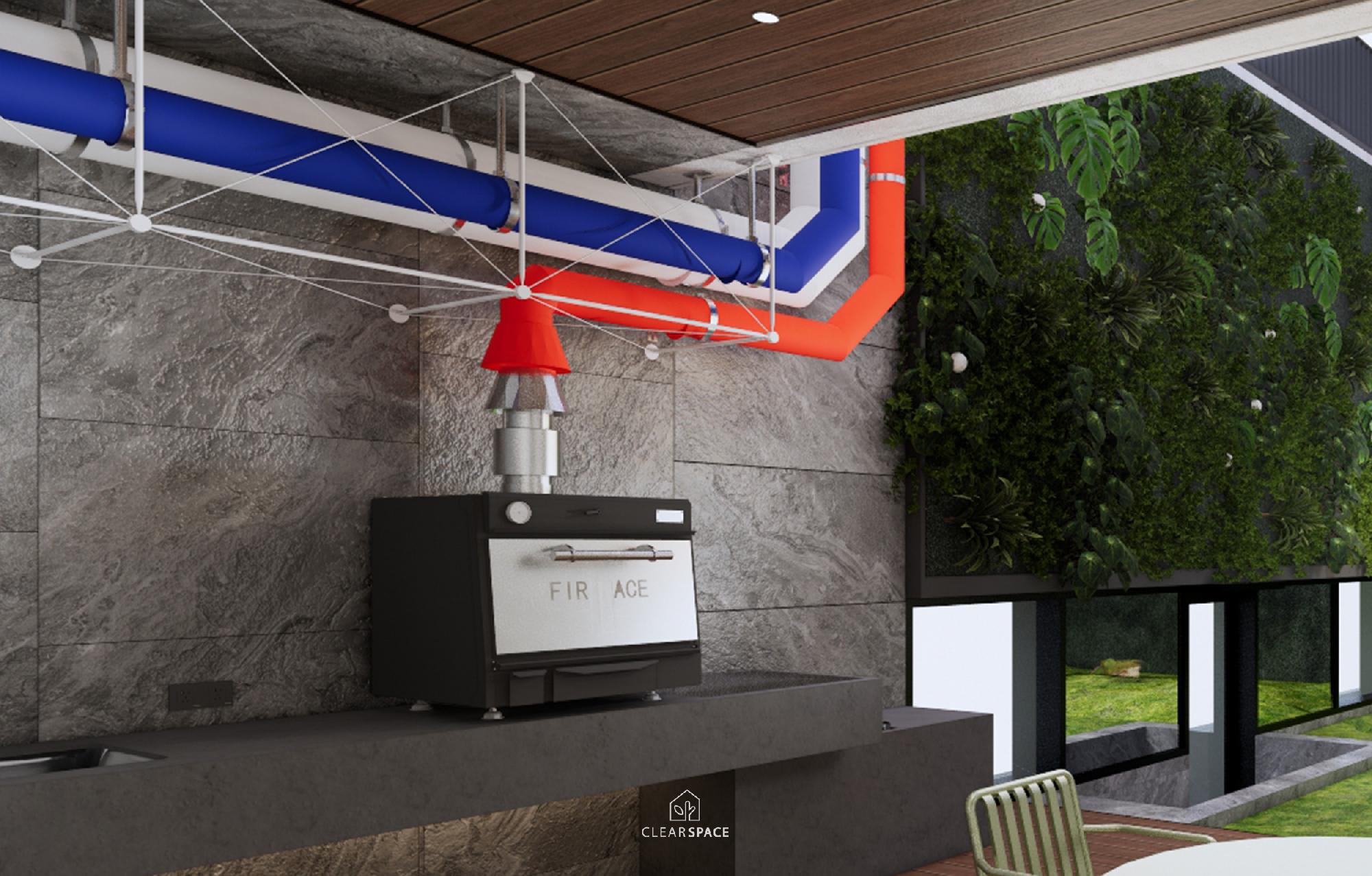
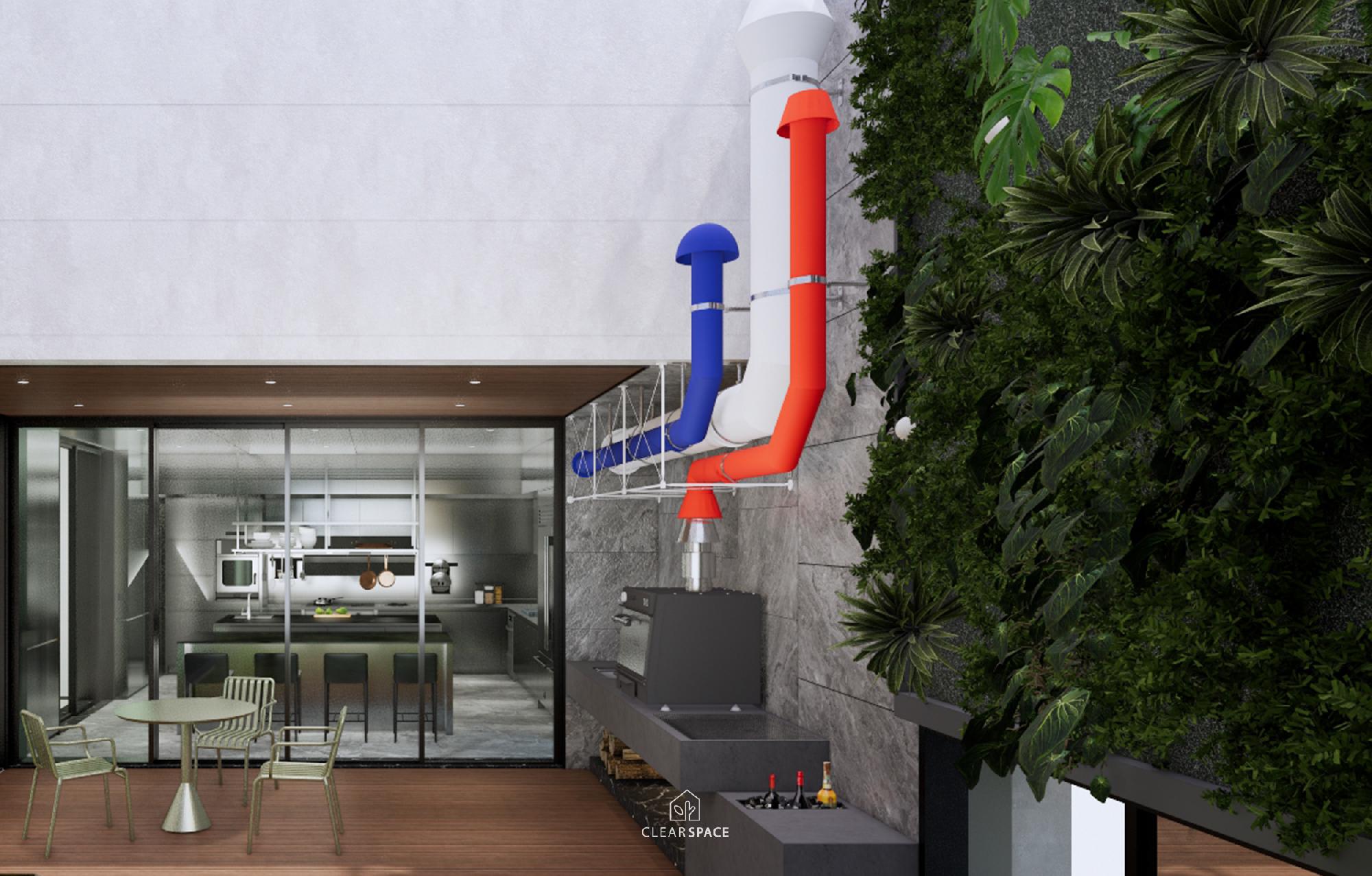
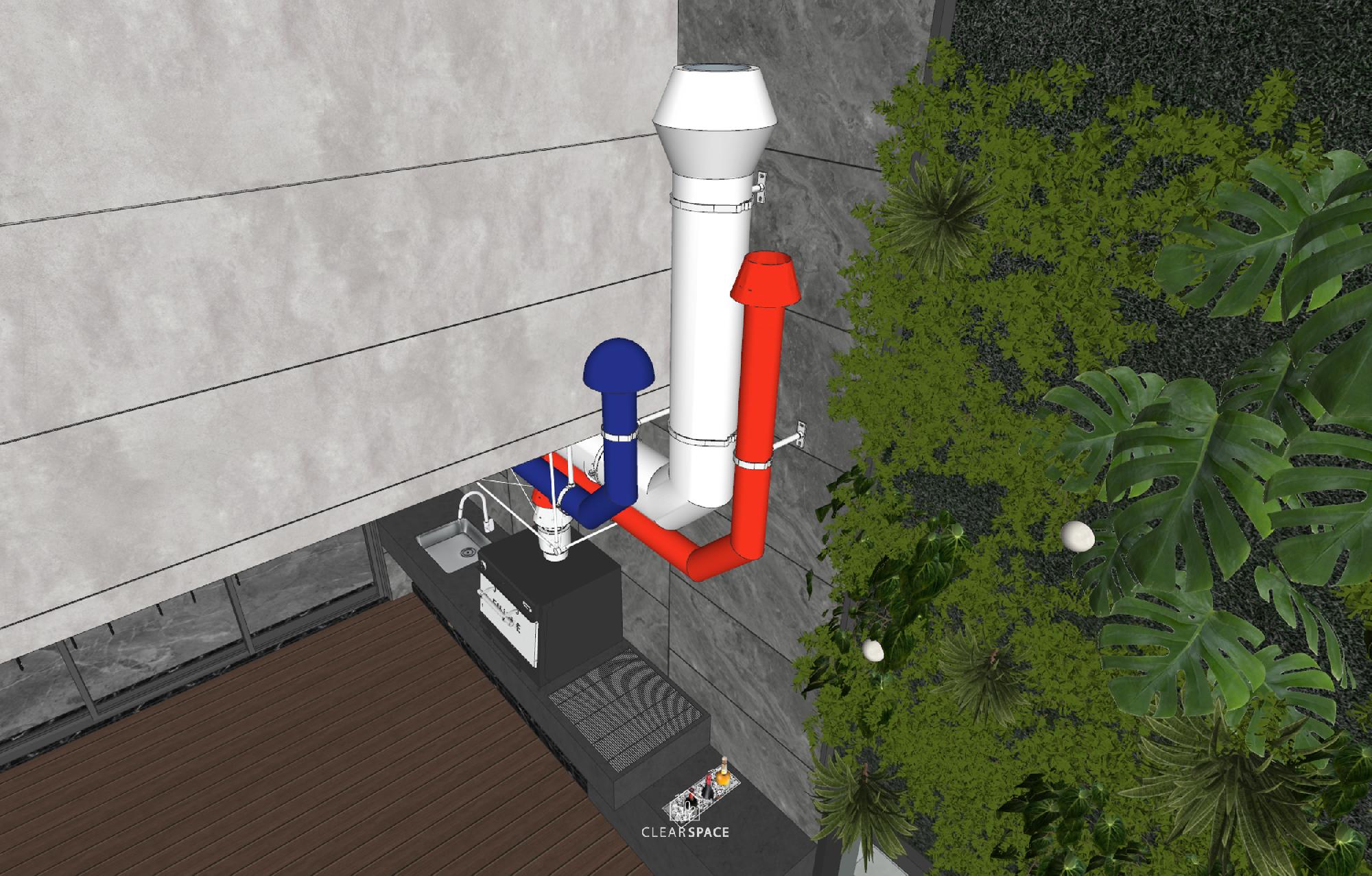
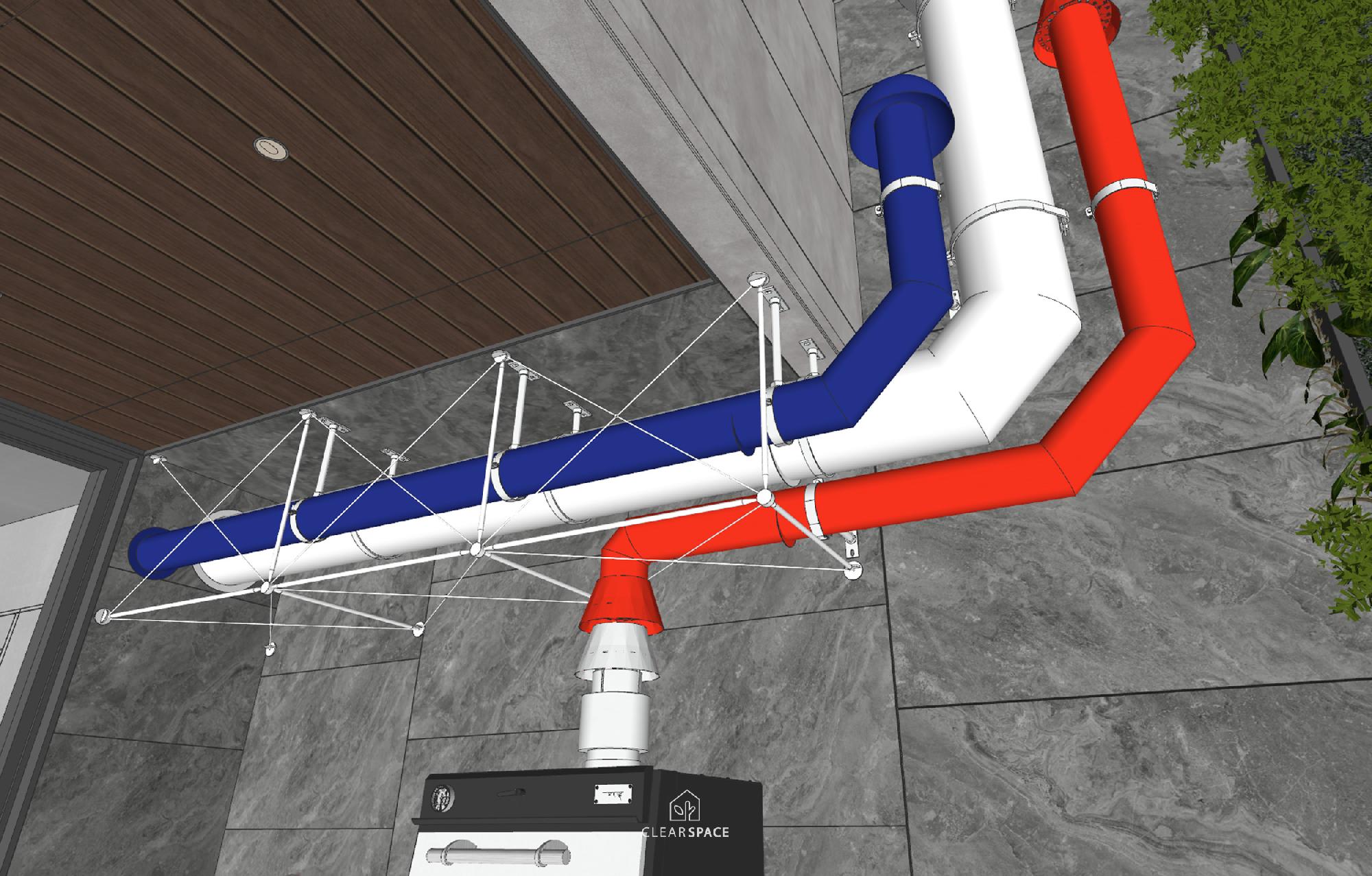
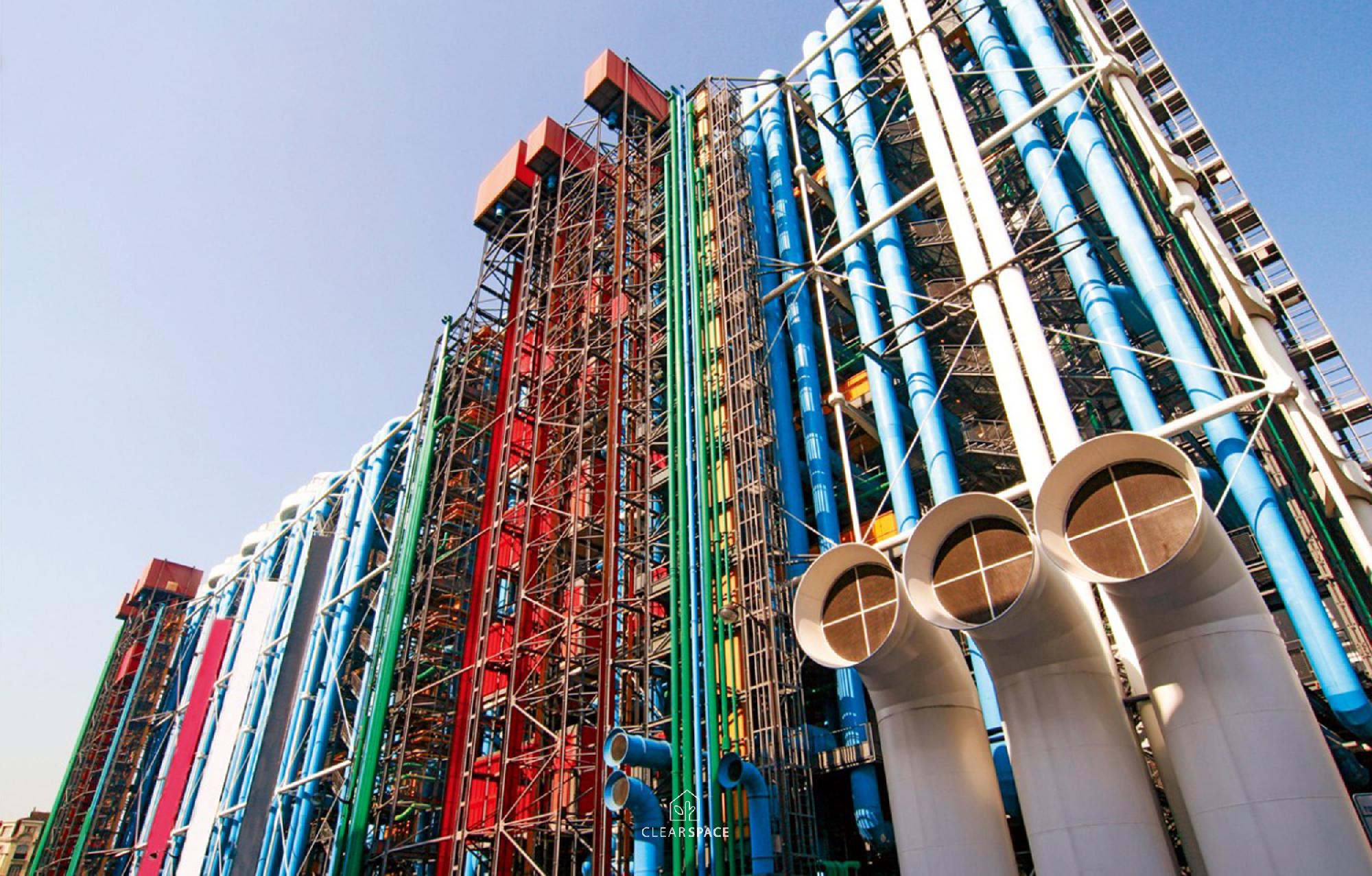
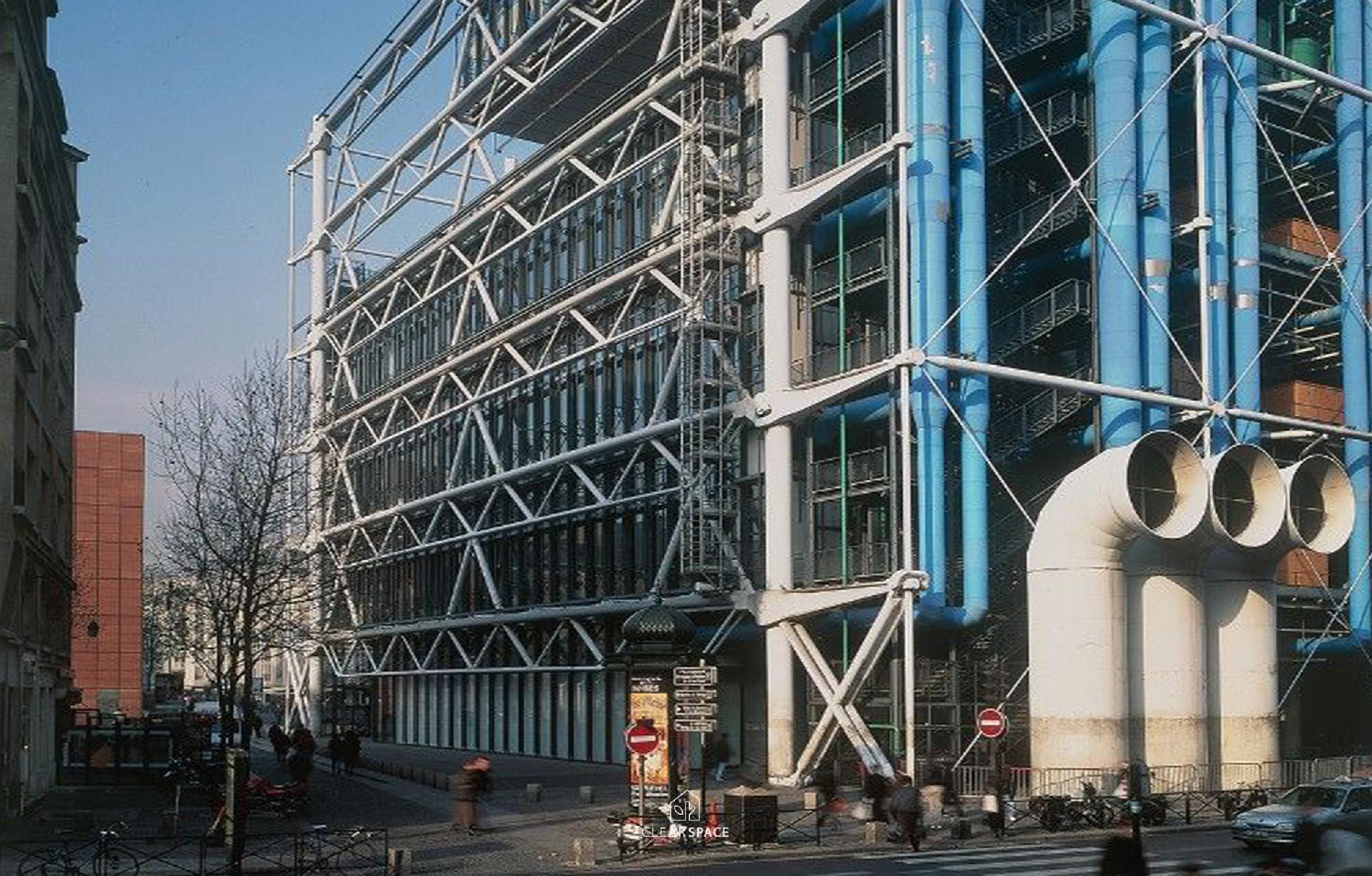
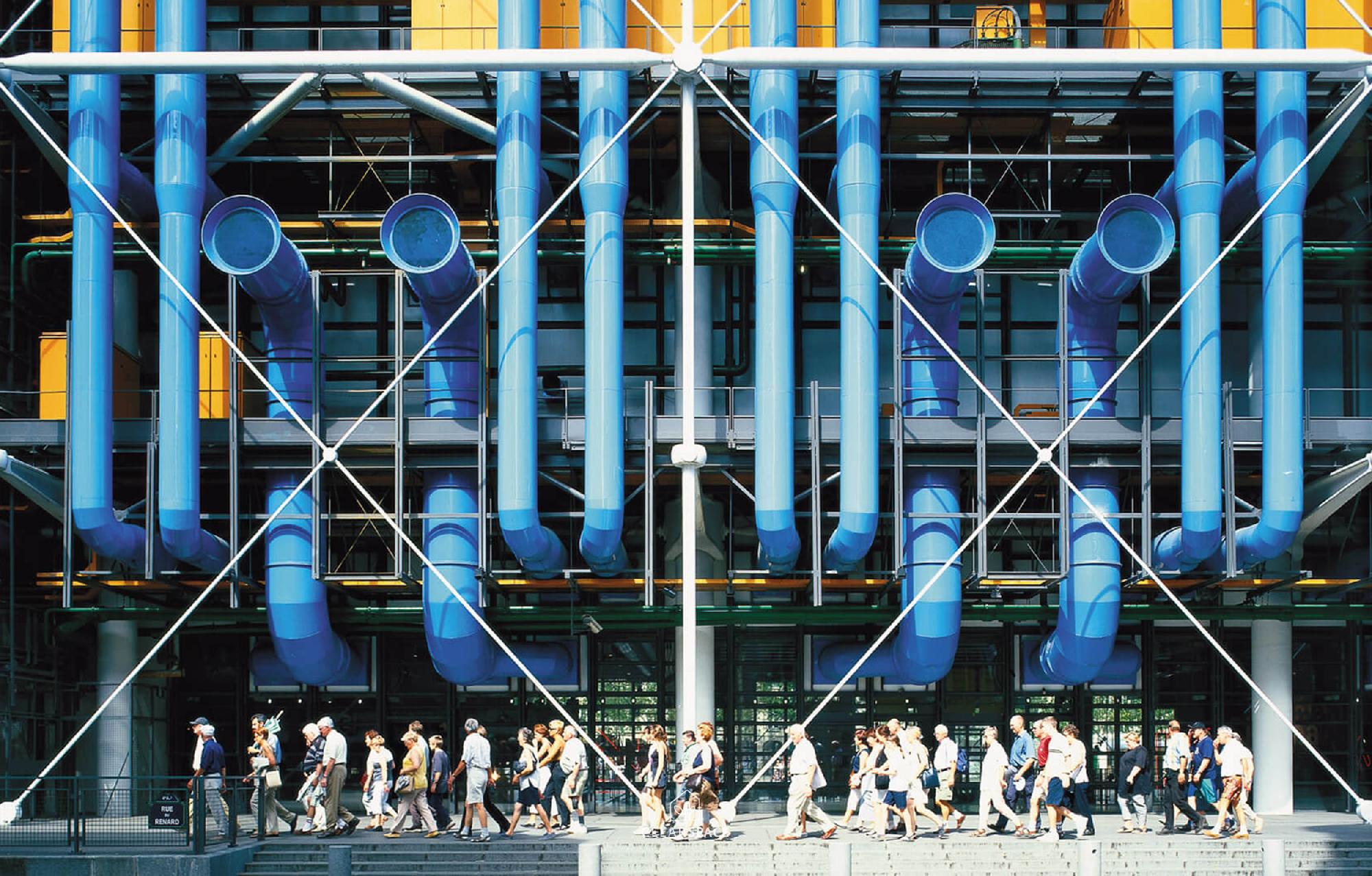
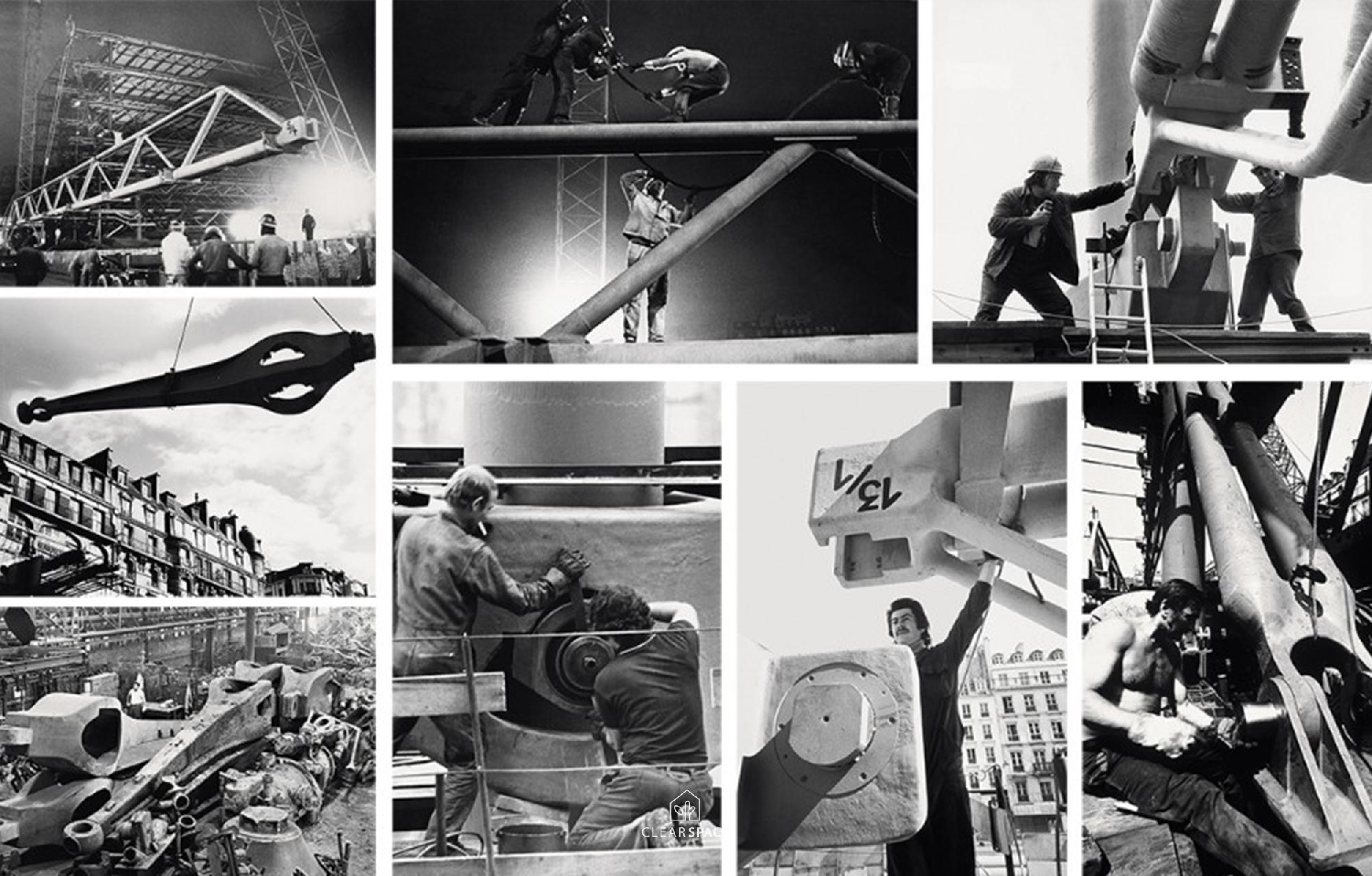
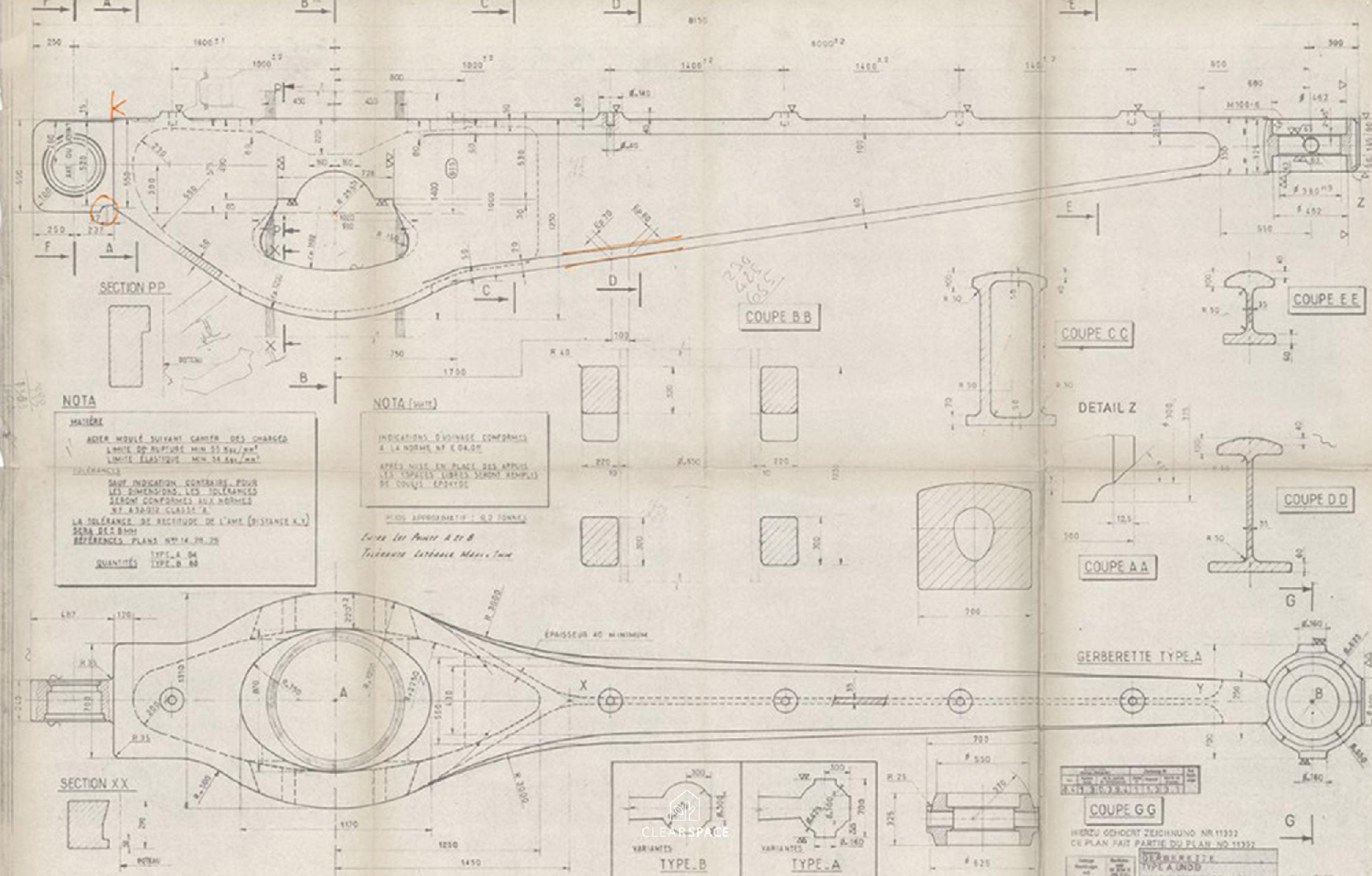
Through the use of blue, white, and red pipes, the design pays tribute to the Centre Pompidou in Paris, as well as to the architectural vision of Renzo Piano and Richard Rogers.
Instead of concealing technical systems behind ceilings or walls, the project brings them forward as part of the spatial expression. The ducts become both functional infrastructure and sculptural elements. Their clear direction, exposed joints, white supporting frame, and diagonal bracing create a language similar to an architectural exoskeleton. In this way, the design reflects the high-tech architectural spirit in which structure, system, and function are openly displayed.
The colors blue, white, and red carry a direct association with French culture, but they are also used here to express movement, clarity, and energy. The pipes guide the eye across the ceiling and wall, turning airflow into a visible design rhythm. What is normally invisible—the circulation of air, the logic of ventilation, and the coordination of equipment—is translated into a bold visual experience.
藍白紅的機能生活
本案將原本隱藏於建築內部的排風管線轉化為視覺主角,透過藍、白、紅三色的管道配置,向法國龐畢度中心,以及義大利建築師 Renzo Piano 與英國建築師 Richard Rogers 的高科技建築精神致敬。
冷冽的工程感與溫暖的生活場景並置,創造出既理性又具趣味的空間體驗。排風系統不只是技術設備,也成為連結烹飪、聚會、戶外休閒與建築記憶的設計媒介。設計不再將設備視為必須遮蔽的配角,而是將其結構、機能與色彩重新組織,使管線成為空間中具有識別性與敘事性的藝術元素。
藍、白、紅不僅呼應法國文化符號,也象徵空氣流動、結構秩序與能量傳遞。管線以清楚的走向穿梭於天花與牆面之間,搭配白色支架與斜撐構件,形成近似建築外骨骼的語彙。這種設計讓機能不再被隱藏,而是被誠實呈現,展現工業美學中「形式來自功能」的精神。
- Tranquil Pond 寧靜之池
- Geometric Light Rhythm 幾何光序
- Screen of Rivers and Mountains 江山之屏
- Whirlpool of Time 時光漩渦
- Floating Reflection 懸浮映景
- The Floating Bed 漂浮床
- The Acoustic Forest Light 靜音森光
- The Floating Kitchen 浮島之廚
- Beneath the Welded Light 焊光之下
- The Island of Gathering 圍聚之島
- A Timeline of Drainage 排水剖面
- The Moon Stone Bar 月石吧
| << | 1 2 3 4 5 | >> |


